
VRTrust General Ledger: Controlled Accounting for Vacation-Rental Finance
How VRTrust turns vacation-rental activity into consistent, balanced journals
White paper
Linked public guides and the application programming interface (API) reference define current product behavior. Download the branded A4 PDF edition.
| Document field | Value |
|---|---|
| Version | 0.12 |
| Publication date | 27 August 2026 |
| Author | Benjamin Kniffler, CTO |
| Organization | VRPlatform |
Executive Summary
VRTrust is VRPlatform's accounting system of record for vacation-rental operations. Reservations, payments, fees, ownership periods, transactions, bank activity, and statements provide the source facts for its general ledger. Financial reports and owner statements read from that same journal.
Vacation-rental accounting brings several dates and economic parties into one business event. Booking, cash receipt, check-in, revenue recognition, owner statement, payout, settlement, and correction can fall in different periods. Ownership can change during a stay or statement month. A property manager may also hold owner and guest funds in trust while paying its own costs from an operating account.
VRTrust applies these decisions through one accounting model. Each journal entry retains its account, posting date, ledger, accounting party, property, ownership period, currency, and business source. The model supports revenue recognition, owner allocation, trust and operating accounting, statements, reconciliation, reporting, and drilldown.
Those fields support the financial checks required for trust accounting. Bank reconciliation matches imported cash activity to the transactions recorded in the ledger. Folio and reservation balancing connects settlements with the payments assigned to each booking. Trust Reconciliation compares trust assets with the recorded obligations to owners, guests, tax authorities, the manager, and other trust parties.
VRTrust's journal compiler turns current business facts and accounting policies into the required journal entries. When those inputs remain unchanged, the journal result remains unchanged. When a source fact changes, VRTrust compares the recalculated journal with the recorded entries and applies the smallest permitted correction. Entries unrelated to the change remain intact with their source, statement, reconciliation, and audit relationships.
Every correction must pass balance, closed-period, statement, reconciliation, and concurrent-write controls before it commits. If a control fails, the journal remains unchanged. Trust and operating books are validated separately, and reported balances retain a path back to the entries and business events that produced them.
VRTrust keeps operational activity and accounting in agreement. Finance teams can reconcile bank activity with reservation payments and trust obligations, trace reported balances to their business source, and correct eligible activity while protected history remains fixed.
Why Vacation-Rental Accounting Needs Its Own Ledger
The financial meaning of a reservation cannot be determined from one date or one cash movement. A booking can create a receivable months before the stay. The guest may pay before revenue is recognized. An online travel agency (OTA) may deposit a net settlement that combines gross payments and fees. The owner's statement and payout can occur in later accounting periods.
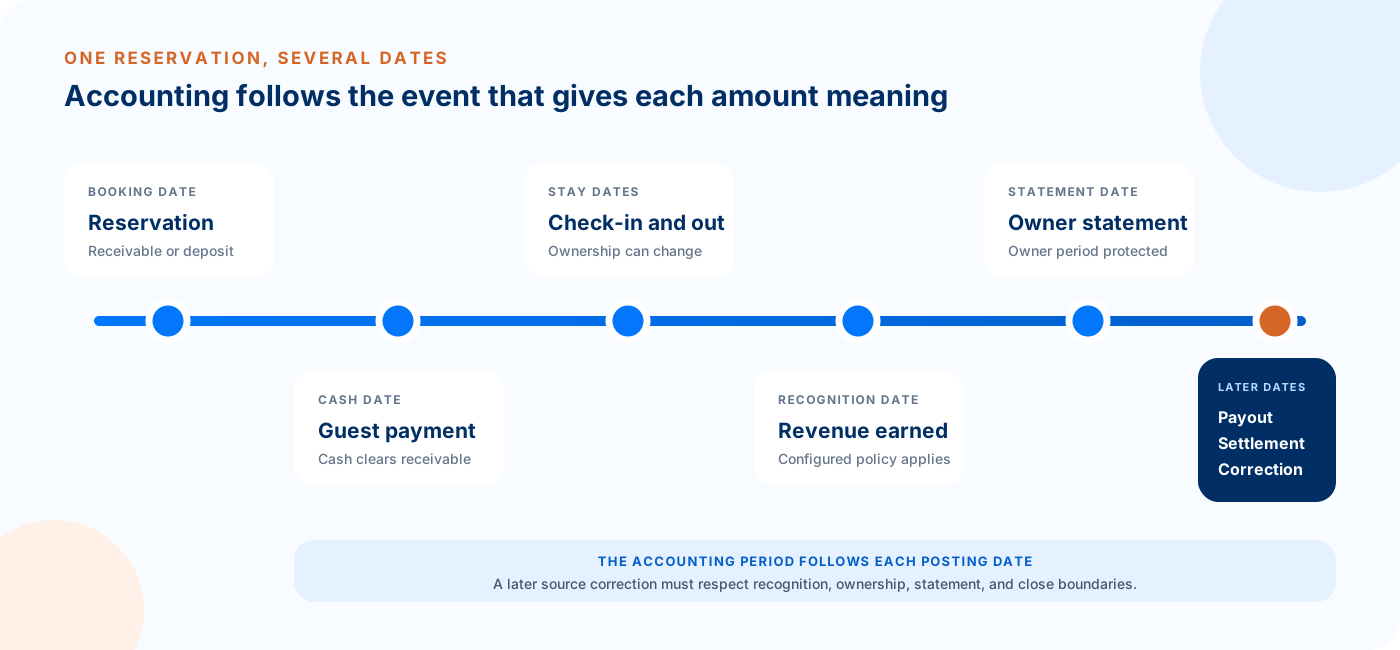
Figure 1. One reservation can cross several operational and accounting dates before a later source correction reaches the ledger.
The same activity can also affect several parties. Guest funds may be held in trust. Revenue and expenses may belong to one or more owners. Management fees and operating expenses belong to the property manager. Taxes remain separate liabilities until remitted.
| Business event | Accounting question |
|---|---|
| Reservation created | Which receivable, deposit, and deferred-revenue entries apply? |
| Guest payment received | Which receivable clears, and when did cash move? |
| Stay recognized | Which period, property, and ownership group earns the revenue? |
| OTA settlement received | How do the net deposit, gross payments, and fees reconcile? |
| Owner statement published | Which owner-side entries become protected history? |
| Owner payout initiated | Which later-period cash and payable entries are required? |
| Source correction received | Which accounting changes, and which history remains intact? |
An ownership change can split one month across two ownership periods with different owners or percentage shares. A published owner statement can protect owner-side activity while eligible manager-side activity remains open. A correction may belong in the current period, a prior open period, or a period that is already closed.
VRTrust evaluates these accounting consequences where the operational facts originate. Integrations with property management systems (PMSs), OTAs, banks, card providers, expense systems, and payment providers feed the same model. Exports can send the resulting accounting elsewhere, while the chart, journal, close state, and financial balances remain available in VRTrust.
One Accounting Model From Reservation To Reporting
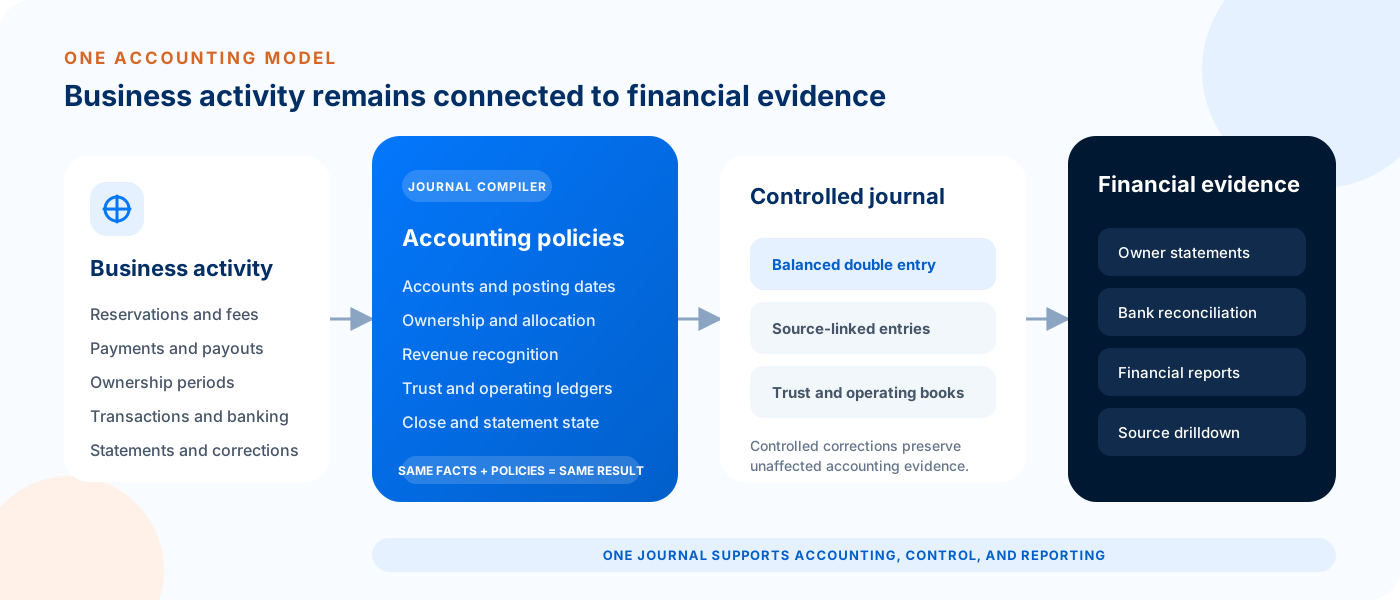
Figure 2. Business activity and accounting policies produce one controlled journal for statements, reconciliation, reports, and financial drilldown.
VRTrust's journal compiler translates business facts and accounting policies into the journal entries required for each reservation and transaction. The compiler resolves the dimensions that determine the financial meaning of every entry:
| Dimension | Accounting consequence |
|---|---|
| Account | Determines financial-statement classification |
| Posting date | Determines the accounting and reporting period |
| Ledger | Separates trust, operating, and historical activity |
| Accounting party | Separates owner, manager, and neutral activity |
| Property | Preserves listing attribution and hierarchy |
| Ownership period | Applies the owners and percentage shares in effect for the activity |
| Currency | Defines the currency in which the journal must balance |
| Business source | Links the entry to its reservation, payment, fee, or transaction |
An ownership period combines a property, date range, owner members, allocations, reserve behavior, and business model. Periods cannot overlap. A mid-month handover can create two statement identities for the same property and month. Pro-rata revenue recognition can assign different stay nights to different ownership periods.
Booking creation, cash receipt, revenue recognition, payout, and adjustment can use different posting dates. Current recognition methods include check-in, check-out, booking date, and pro-rata recognition across stay nights. When cash arrives before recognition, accounting can use deferred revenue until the configured recognition date.
Each journal entry has one currency. Balance controls operate separately by currency and do not offset one currency against another. Automated currency conversion, revaluation, and multi-currency consolidation are outside the current product scope.
Live accounting uses trust and operating ledgers. The historical ledger preserves approved pre-go-live detail without changing live post-go-live balances. Opening balances bridge the final source position into live accounting.
See Accounting Model and Double Entry, Listings, Ownership, and Attribution, and Revenue Recognition and Posting Dates.
Consistent Journals And Controlled Corrections
The journal compiler evaluates a defined set of inputs: source facts, account mappings, recognition policies, ownership periods, posting dates, and accounting rules. When those inputs remain unchanged, recalculating the journal produces the same entries and the same accounting result. This property is known as determinism.
For a finance team, determinism means that refreshing an unchanged reservation does not create duplicate entries or unexplained differences. A deliberate change to an accounting policy can change the result, so rule changes can be tested against known scenarios before they affect journal behavior.
When a source fact changes, VRTrust recalculates the journal that should exist and compares it with the journal already recorded. It then applies the smallest permitted correction:
- an amount or account correction updates the affected entry;
- an ownership, party, ledger, or classification correction updates the affected accounting;
- a posting-date correction retires the entry at its former date and records it at the new date; and
- entries unrelated to the correction remain unchanged.
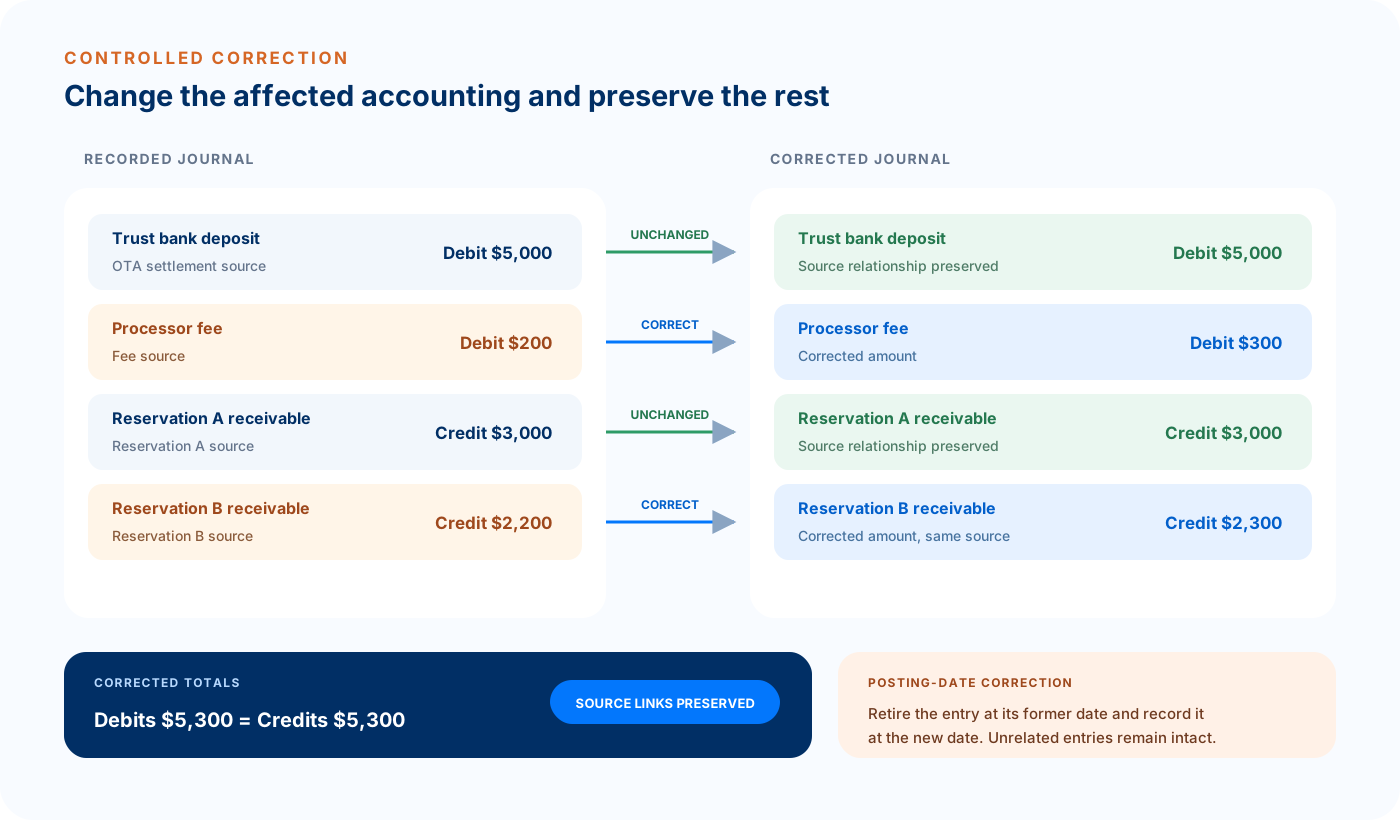
Figure 3. A source correction updates the affected journal entries while the bank entry, unrelated reservation, and source relationships remain intact.
Preserving unaffected entries protects the relationships used by owner statements, reconciliation, audit evidence, and financial drilldown. A posting-date change receives different treatment because the accounting moves to another point on the ledger timeline.
Worked example: one OTA settlement and one correction
Assume an OTA deposits $5,000 into a trust bank account. The settlement contains $5,200 of guest payments across two reservations and a $200 processor fee. The accounting policy assigns the processor fee to the owner side.
| Ledger | Party | Source | Account | Debit | Credit |
|---|---|---|---|---|---|
| Trust | Neutral | OTA settlement | Trust bank | $5,000 | |
| Trust | Owners | Processor fee | Processing-fee expense | $200 | |
| Trust | Owners | Reservation A | Accounts receivable | $3,000 | |
| Trust | Owners | Reservation B | Accounts receivable | $2,200 | |
| Total | $5,200 | $5,200 |
The settlement retains the OTA payout reference. Each receivable entry retains its reservation source. The $5,000 bank record can reconcile to the net deposit while the gross guest payments clear the two receivables. Revenue recognition remains on its configured dates.
This is folio and reservation balancing. The bank shows the $5,000 net deposit, while the two reservations show $5,200 of gross guest payments. The separately recorded processor fee explains the difference between cash received and the payments assigned to the reservation folios.
The OTA later changes the fee to $300 and Reservation B's gross payment to $2,300. The bank deposit and Reservation A remain unchanged.
| Entry | Original | Corrected | Result |
|---|---|---|---|
| Trust bank deposit | $5,000 | $5,000 | Unchanged |
| Reservation A receivable | $3,000 | $3,000 | Unchanged |
| Reservation B receivable | $2,200 | $2,300 | Corrected |
| Processor fee | $200 | $300 | Corrected |
The corrected journal has $5,300 of debits and $5,300 of credits. If the OTA instead changes Reservation B's posting date, VRTrust retires that receivable at the former date and records it at the new date. The other entries remain intact.
If Reservation A is protected by a published statement, VRTrust preserves its entry. The remaining correction can commit only when the resulting journal passes the applicable balance and historical controls without changing the protected accounting.
Controls That Protect The Books
VRTrust applies a journal correction only after the complete accounting result passes its financial controls.
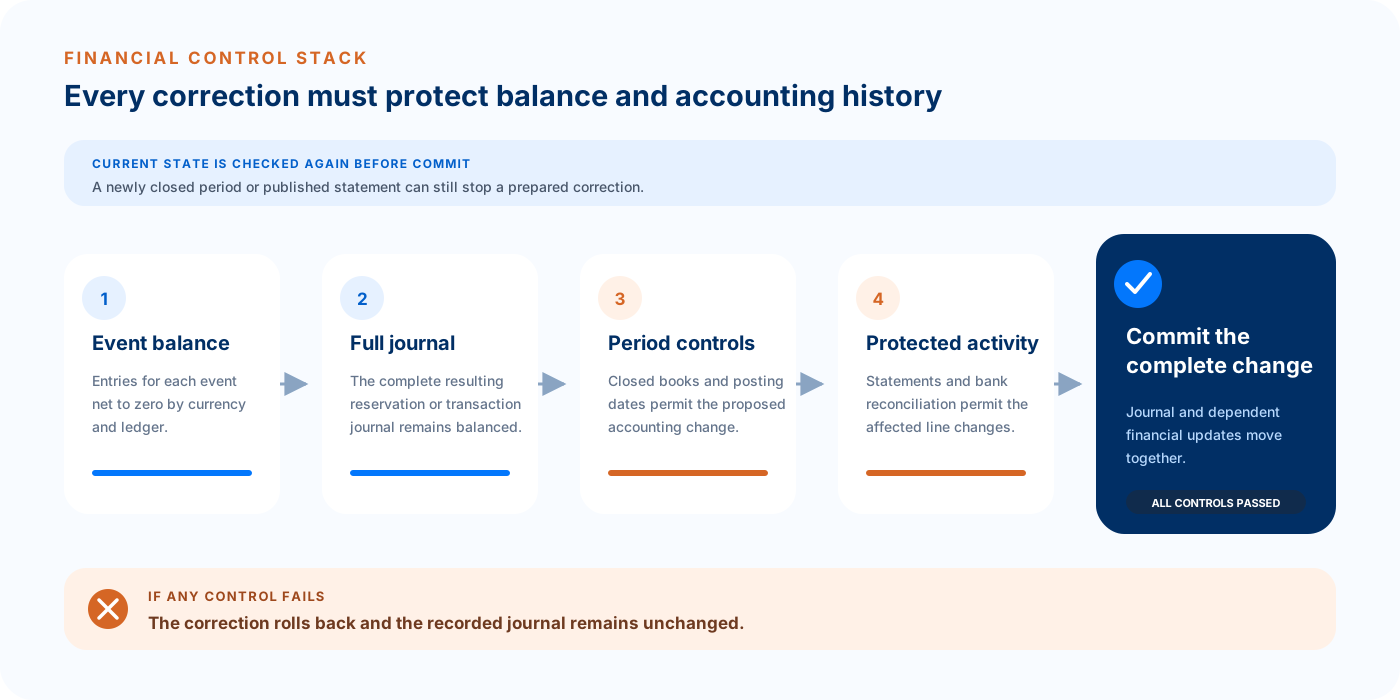
Figure 4. Every correction must pass event balance, complete-journal balance, historical, statement, reconciliation, and final-state checks.
VRTrust validates balance twice. It first checks the entries produced for each accounting event. Before committing a correction, it checks the complete resulting journal for the reservation or transaction. Both checks operate separately by currency and ledger.
| Control | Accounting result |
|---|---|
| Event balance | The entries created for an accounting event net to zero |
| Complete-journal balance | The resulting reservation or transaction journal remains balanced |
| Books closing | Entries cannot enter, leave, or change a closed period |
| Statement period | Owner-side accounting cannot change an in-review or published period |
| Statement attachment | Entries attached to a persisted statement remain protected |
| Bank reconciliation | Reconciled payment activity cannot be changed without the required action |
| Final-state check | Current close and statement state are checked again before commit |
Locks apply to the affected accounting. Owner activity protected by a published statement can remain fixed while eligible manager activity in the same transaction remains open. A reservation can also accept an adjustment posted after a locked period without changing its protected history.
Before commit, VRTrust rechecks the current close, statement, and reconciliation state. If any financial or historical control fails, the journal and its related updates roll back together.
Access and financial responsibilities
Financial permissions can separate bank-detail administration, transaction recording, statement publication, report access, books closing, and Automated Clearing House (ACH) execution. ACH execution requires a separate grant. Each company assigns these permissions and reviews whether they meet its separation-of-duties policy.
Trust And Operating Accounting
Live journal entries belong to the trust or operating ledger. The trust ledger records funds held for owners, guests, tax authorities, and other trust parties, including reservation revenue, owner balances, and payouts. The operating ledger records the manager's own operating-expense accounting.
Operations Accounting is available to VRPlatform customers. Teams that do not use it continue to place live activity in the trust ledger. Reports can show either ledger or a combined view.
Cross-ledger events occur when operating cash funds an owner payout or a trust account pays a manager expense. VRTrust records the position between the two books through the configured Due To/From Trust account.
For a $1,000 owner payout funded from operating cash, the simplified journal is:
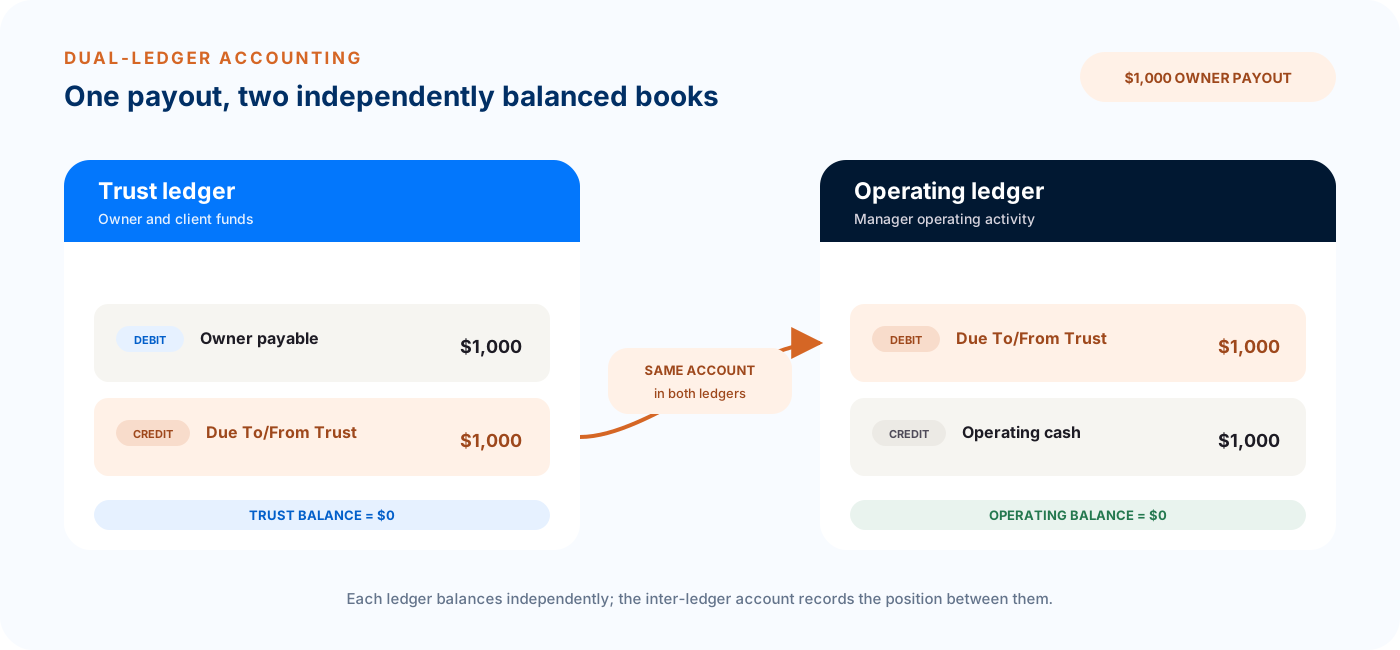
Figure 5. Trust and operating remain independently balanced while the Due To/From Trust account records the position between them.
| Ledger | Debit | Credit |
|---|---|---|
| Trust | Owner payable $1,000 | Due To/From Trust $1,000 |
| Operating | Due To/From Trust $1,000 | Operating cash $1,000 |
Each ledger balances independently. The Due To/From Trust account records the position between the books until the corresponding bank transfer clears it.
Trust Compliance And Reconciliation
Trust compliance depends on agreement between external cash activity, the general ledger, reservation financials, and the obligations represented by the trust balance. VRTrust connects these views through the journal and the source relationships carried by its entries.
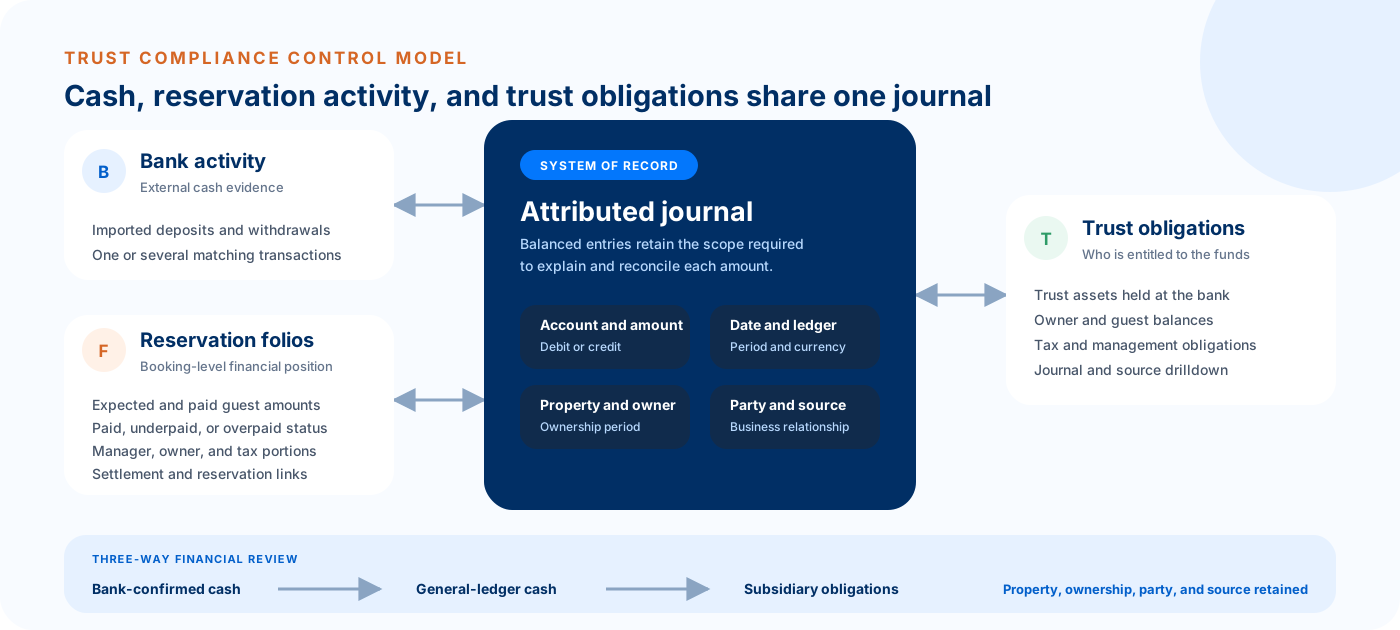
Figure 6. Bank activity, reservation folios, and trust obligations reconcile through the same attributed journal.
Bank reconciliation
Bank reconciliation links imported bank activity to the transactions that explain it. A match can use one transaction or several transactions whose combined impact equals the bank record. Each transaction retains its bank account, date, and the listings and reservations referenced by its lines.
The result shows whether the cash movement recorded in VRTrust agrees with the bank. Unmatched and ambiguous activity remains available for manager review.
Folio and reservation balancing
A reconciled deposit confirms that cash reached the bank. Folio and reservation balancing checks whether that cash agrees with the payment activity assigned to the underlying bookings.
A single OTA deposit can contain guest payments for several reservations, processor fees, taxes, refunds, and other deductions. VRTrust records those components separately while preserving their relationship to the net settlement. Reservation financials show expected and paid amounts, payment status, and the manager, owner, and tax portions of each folio.
Finance teams can trace cash received to the amount a manager reports as paid for each reservation. A difference can be investigated through the relevant settlement, transaction, payment, fee, or booking.
Trust and three-way reconciliation
Trust Reconciliation compares trust assets with the recorded obligations to owners, guests, tax authorities, the manager, and other trust parties. The supporting detail retains property, ownership, accounting party, account, currency, ledger, and source attribution.
Bank reconciliation and Trust Reconciliation together provide the three-way view: cash confirmed by the bank, cash recorded in the general ledger, and the subsidiary balances that explain who is entitled to the funds.
These workflows provide accounting evidence for trust-compliance review. Jurisdiction-specific legal and regulatory review remains part of the company's compliance process.
Accounting Coverage
VRTrust already covers many entries that require manual journals in other accounting systems. It records them through transaction and opening-balance workflows.
| Accounting concept | VRTrust workflow | Current coverage |
|---|---|---|
| Vendor bill or accrual | Expense and accounts payable | Supported |
| Payroll or contractor bill | Expense posts to a payroll account | Supported as bill/payment |
| Prepaid purchase | Transaction line posts to the prepaid asset | Supported |
| Prepaid amortization | No scheduled amortization workflow | No dedicated workflow |
| Fixed-asset purchase | Transaction line posts to the fixed-asset account | Supported |
| Depreciation | No depreciation schedule | No dedicated workflow |
| Loan proceeds | Deposit posts against the loan liability | Supported |
| Loan repayment | Expense separates principal and interest | Supported |
| Tax bill or payment | Transaction posts to a tax account | Supported as bill/payment |
| Opening accrual, deferral, or prepaid | Operating opening trial balance | At go-live |
| Year-end adjustment | Supported-source workflow | Entry-dependent |
| General reclassification | No unrestricted manual journal | Limited |
Manual journal entries
VRTrust does not provide an unrestricted form for entering debits and credits. Users and integrations create supported financial records. The journal compiler calculates the entries and checks the complete result before saving it.
Public workflows cannot insert individual live journal rows. An adjustment must preserve journal balance and respect closed periods, published statements, reconciliation locks, and the source links used by financial reports.
Some controller work remains outside VRTrust today. Depreciation, prepaid amortization, and some year-end adjustments may remain in a separate corporate accounting system. Bringing those entries into VRTrust would require dedicated sources, such as a depreciation run or adjustment batch. Each source would carry its own dates, evidence, approval state, and reversal rules. The journal compiler would apply the same financial controls used elsewhere.
Reporting And Financial Evidence
An owner statement presents owner-side activity for one ownership period, month, and currency. Draft statements calculate eligible activity without attaching journal entries. In-review and published statements attach eligible entries, preserve their content, and create owner-side period controls.
Paying a published statement creates a payout transaction linked to the statement. The payout uses its own transaction date, so its journal entries can appear in a later accounting month while retaining the relationship to the statement that initiated it.
Trial balance, profit and loss, balance sheet, journal detail, Trust Reconciliation, guest balances, tax liability, manager statements, and owner statements read from the stored journal. Their supported filters preserve date, account, property, ownership, currency, party, and ledger scope.
Drilldowns open journal detail with the same financial scope. A finance user can follow a reported balance to its entries and then to the reservation, transaction, payment, fee, bank record, or statement that produced them.
Audit events connect an approved user or business-record change with its accounting effect. Public journal-entry evidence can include account, amount, posting date, ledger, party, ownership period, and statement relationship. Credentials, raw provider payloads, guest data, and fields outside the public audit catalog remain excluded.
Statements, reconciliations, reports, and audit evidence use the journal as their accounting source. A reported amount can be followed to its journal entries and then to the reservation, transaction, payment, fee, bank record, or statement that produced it.
See Statements and Reporting Periods, Banking, Reports, and Audit Events.
What Finance Teams Can Verify
A finance or implementation team can evaluate the architecture through these observable results:
- Unchanged source facts and accounting policies produce an unchanged journal.
- A correction changes the affected accounting while unrelated entries remain intact.
- Journals governed by the current balance controls remain balanced separately by currency and ledger.
- Closed periods and published statements prevent prohibited historical changes.
- Trust and operating books balance independently through the configured Due To/From Trust account when an event crosses both ledgers.
- An imported bank record can reconcile to one transaction or to several transactions whose combined bank-account impact matches it.
- A net settlement can be explained through its reservation payments, fees, refunds, taxes, and other recorded components.
- Reservation financials show expected and paid amounts, payment status, and the manager, owner, and tax portions of the folio.
- Bank cash, general-ledger cash, and the obligations behind the trust balance can be reviewed through the connected reconciliation workflows.
- Reported balances retain drilldown to journal entries and business sources.
- Financial permissions can separate accounting, statement, reporting, bank, close, and ACH responsibilities.
- A concurrent statement publication or close-state change can still block a correction before it commits.
Automated accounting tests evaluate complete journal results from explicit source facts and accounting policies. Control tests cover balance validation, rollback, historical controls, retries, concurrent changes, and related financial updates. Together they test the accounting decision and the controls that protect the recorded journal.
Linked public guides and application programming interface (API) reference pages define current behavior, product availability, and exact integration contracts.
Conclusion
VRTrust keeps vacation-rental operations and accounting connected. Reservations, payments, fees, bank activity, ownership changes, and statements feed the journal. Corrections must pass the same balance and historical controls as the original posting.
Bank reconciliation, folio and reservation balancing, Trust Reconciliation, owner statements, and financial reports all use that journal. Finance teams can trace a reported balance to the activity that produced it and see how a correction changed the books.
The current workflow coverage is defined in this paper. Corporate entries without a supported VRTrust source may remain in a separate corporate accounting system.
Technical References
- Accounting Model and Double Entry
- Listings, Ownership, and Attribution
- Revenue Recognition and Posting Dates
- Locking and Historical Integrity
- Statements and Reporting Periods
- Banking
- Reports
- Audit Events
- Opening Trial Balance
- Historical Journal Entries
- Transactions
- Reconcile Bank Records
- Access and Permissions